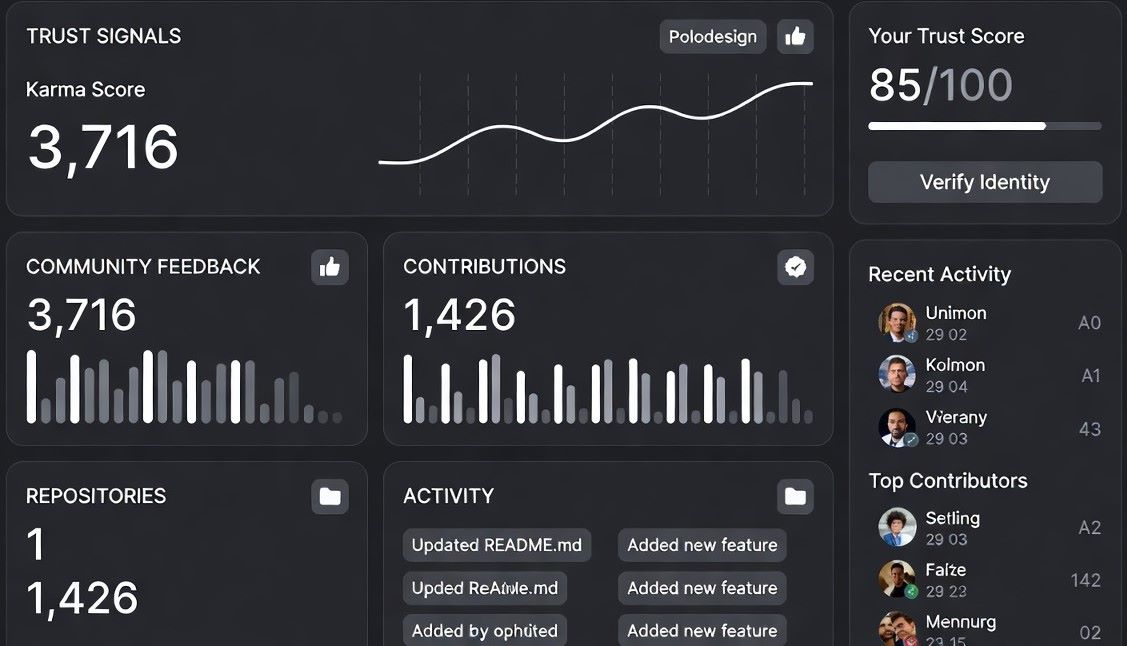
Online reputation has measurable value. A 2018 study published in the journal Management Science found that reputation signals such as ratings and history significantly influence trust and transaction success in digital marketplaces. The same pattern shows up across the internet, from ride-sharing apps to open source communities. People trust systems that show proof of history. When identity leaves a trail, confidence follows.
Reddit works much the same way. Karma scores, account age, and posting history quietly signal credibility across the platform. Communities often trust accounts that have been around for years and have participated in discussions. That is why marketplaces centered on reputation exist, including services like a Reddit account seller. Whether developers agree with the practice or not, the idea behind it reveals something important. Digital identity, once established, becomes a form of infrastructure.
Reputation Is a System Layer
Developers tend to think about infrastructure in technical terms like authentication services, databases, and APIs. Yet reputation functions almost like an invisible service layer that runs on top of everything else.
Reddit offers a simple example. A brand new account posting advice in a technical subreddit may get ignored or downvoted. The same comment from a five-year-old account with strong karma often receives engagement. Nothing changed about the content itself. The difference lies in the trust signal attached to the identity.
Software systems use similar patterns. Authentication confirms identity. Version control records history. Reputation systems evaluate past behavior. Each layer reduces uncertainty in a distributed environment where strangers interact.
Think of it like a developer’s commit history. A clean Git history builds confidence among collaborators. When contributors consistently push thoughtful code, reviewers feel comfortable approving changes. Reputation accumulates quietly through repeated interactions.
GitHub Shows the Same Pattern
Open source communities offer perhaps the clearest example of reputation acting as infrastructure. On platforms like GitHub, a developer’s history matters almost as much as the code they submit.
A contributor with years of commits, active repositories, and constructive discussions gains informal authority. Maintainers trust pull requests from known contributors more quickly. New accounts, meanwhile, often face more scrutiny.
This dynamic mirrors Reddit’s karma system. Both platforms create a timeline of behavior. That timeline acts like a trust ledger.
The interesting part is that no single metric defines credibility. A developer’s influence grows through multiple signals.
- Length of account activity
- Quality of past contributions
- Community feedback
- Consistency over time
Reddit uses karma and post history. GitHub uses commits and stars. Different metrics, same philosophy.
Trust Signals in Distributed Systems
Distributed systems rely heavily on trust signals. According to the National Institute of Standards and Technology (NIST), identity and authentication are foundational elements of secure digital infrastructure. Without them, systems struggle to verify who is interacting within the network.
Reputation layers extend that idea beyond identity verification. They add context. Developer communities regularly rely on discussion platforms to evaluate ideas, tools, and frameworks, and the quality of those discussions often depends on reputation signals and participation history. Many engineers also study how strategic engagement in developer discussions on Reddit can surface meaningful conversations and help technical communities highlight useful insights and emerging tools.
An account that has existed for six years tells a story. Thousands of comments tell another. A long record of constructive engagement paints a picture that algorithms and humans can evaluate. This is why developers often design reputation scoring mechanisms into platforms. Stack Overflow does it with its points system. Reddit does it with karma. Even marketplaces use seller ratings.
The goal stays the same. Reduce uncertainty between strangers interacting online.
When developers observe marketplaces for aged accounts, including those offered by a Reddit account seller, they are essentially seeing the market price of digital trust signals. It might feel unusual at first glance. Yet it highlights how valuable reputation history has become across modern platforms.
Identity and History Are Hard to Fake
Here is the tricky part. Reputation takes time.
You cannot manufacture five years of thoughtful comments overnight. You cannot instantly replicate a long trail of helpful posts or technical discussions. Building history requires participation, patience, and sometimes a bit of internet stubbornness.
Anyone who has spent time contributing to online communities knows the feeling. You post thoughtful replies. A few get upvoted. Some get ignored. Occasionally, someone argues with you about tabs versus spaces.
Over time, though, your account develops a kind of personality. A recognizable voice. That accumulation becomes a credibility asset.
Platforms recognize this, and system designers often treat historical data as one of the strongest trust indicators available.
Reputation as a Design Lesson
For developers, the takeaway is surprisingly practical. Reputation systems should be treated like infrastructure rather than decoration.
Good platforms reward long-term participation. They track meaningful activity. They allow communities to evaluate behavior across time. These systems do not have to be complex, but they must preserve history.
Reddit accidentally demonstrates this principle very well. Karma, account age, and visible posting records create a social ledger of credibility. The fact that markets exist around those signals, including services connected to a Reddit account seller, simply proves how much users value established digital identity.
Reputation may feel like a social feature, yet it functions more like an engineering component. It helps strangers cooperate, filters noise, and builds trust where none existed before. And honestly, that might be one of the most underrated infrastructure layers on the internet.